
“Dementia is a family disease. It affects every single member of the family.” A practical framework for recognizing the signs and responding with care.
Caring for a loved one with dementia can be one of the most challenging—and emotional—responsibilities a family caregiver will ever face. Dementia isn’t a single disease but a collection of symptoms affecting memory, reasoning, behavior, and the ability to function day to day.
The most common type is Alzheimer’s disease, but there are other forms—each with unique symptoms and challenges. Understanding the differences helps families know what to expect.
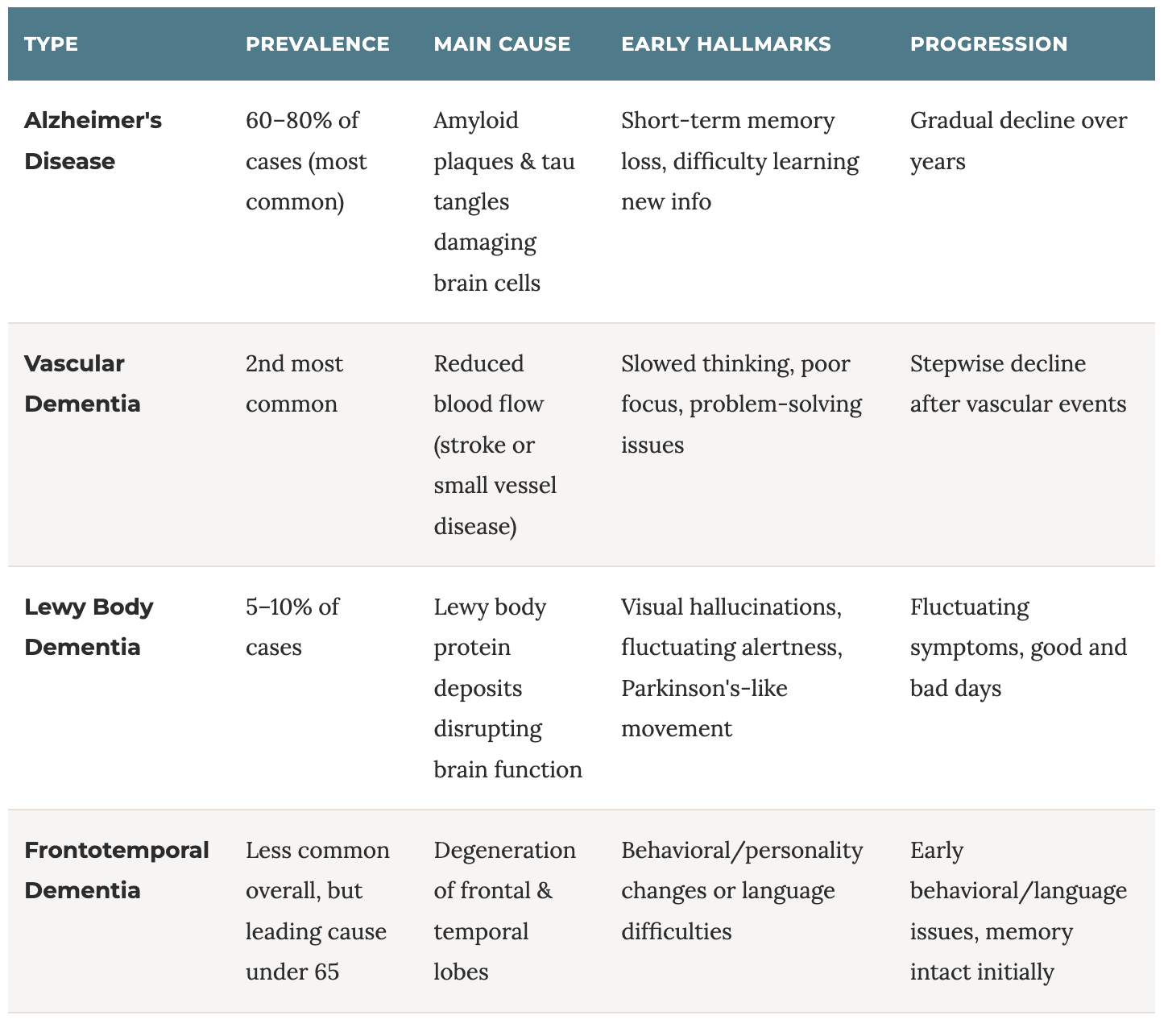
The scale of the issue is staggering. According to the National Institutes of Health, 7 million Americans aged 65+ are living with Alzheimer’s or other dementias—a number projected to double to 14 million by 2060. And behind every diagnosis is not just one individual, but a family.

“Dementia is a family disease. It affects every single member of the family.”
— Dr. Miguel Rivera · Psychiatrist and Dementia Specialist
Understanding Dementia: What It Really Means
In an Age Wise conversation, Dr. Miguel Rivera offered a simple but powerful definition: dementia is “an acquired and substantial decline in three main areas—cognition, activities of daily living, and behavior.”
- Cognition — memory, executive function, and spatial awareness
- Activities of daily living — tasks like dressing, cooking, and managing finances
- Behavior — changes in mood, personality, or social interaction
These categories sound clinical, but for caregivers they quickly become very real. Each small shift is a reminder of how dementia reshapes daily life for everyone involved.
Recognizing the Early Signs
Early detection is critical. Symptoms are often dismissed as “just aging,” but timely recognition allows for earlier intervention and planning. Common early signs include:
- Frequent memory lapses that disrupt daily life (repeating questions, forgetting appointments)
- Difficulty completing familiar tasks like cooking or balancing a checkbook
- Struggling to follow conversations or losing track of stories
- Misplacing items in unusual places (like car keys in the freezer)
- Personality or mood changes, such as irritability or withdrawal
- Disorientation about time, place, or surroundings
If you notice these patterns, encourage a comprehensive evaluation—some causes of memory loss, like thyroid disorders or vitamin deficiencies, are treatable. As Dr. Rivera cautioned, “When it comes to cognitive problems, time is of the essence. The longer you wait, the less the chances are that you may be able to do something about it.”
Creating a Supportive Environment
Dementia can reshape not only the mind but how a person perceives their surroundings. A cluttered or confusing home heightens stress and increases the risk of accidents. Dr. Laura Gitlin, Dean Emerita at Drexel University and author of Better Living with Dementia, stresses that “with disease progression, decluttering is really important… a calmer, simpler space helps reduce confusion and stress.”
Practical home adjustments include:
- Declutter — remove excess furniture, cords, and piles of paper
- Label and simplify — clear signs with words or pictures on doors and drawers
- Lighting — add nightlights and brighten spaces; shadows can be frightening
- Consistency — keep furniture and personal items in the same place; familiarity comforts
- Safety features — cabinet locks for hazardous items, stove shut-off devices, and no loose rugs
These steps may seem small, but together they create an environment where your loved one feels calmer and safer. This is exactly the kind of work the Silver Solutions team handles every day.
Daily Routines and Meaningful Activities
Structure can be grounding. Daily routines give rhythm and predictability, helping reduce anxiety. Care strategies that make a difference:
- Simplify choices — offer two clothing options instead of five
- Break tasks into steps — “Pick up your toothbrush. Now let’s add toothpaste.”
- Use nonverbal cues — smiles, gentle touches, and pointing often communicate better than words
- Maintain meaningful activities — music, art, gardening, or light chores provide purpose and joy
- Be flexible — if one approach isn’t working, pause and try again later
Caring for the Caregiver
The role of a dementia caregiver is relentless, and ignoring your own needs is dangerous. When a caregiver is depressed or distressed, they have a 67% higher mortality rate than peers who aren’t caregiving. As Dr. Gitlin tells families, “Don’t cancel your own doctor’s appointments. Keep exercising, eat well, stay socially connected. You’re in this for the long haul, and you must take care of yourself.”
- Respite care — adult day programs, in-home aides, or short residential stays give you a break
- Support groups — sharing your story with others who understand reduces isolation and guilt
- Build a team — involve siblings, friends, or faith communities; caregiving isn’t a solo act
- Set realistic expectations — focus on what you can influence: safety, comfort, and small joys
| Why Support Groups Matter
Insights from a Certified Alzheimer’s Educator For more than a decade, Tino Negri, a Certified Alzheimer’s Educator and co-owner of ComForCare South Florida, has led dementia caregiver support groups. His perspective is clear: “My job is not to change their loved ones with dementia. My job is to change caregivers.” What started as a single group 13 years ago is now 15 groups across South Florida, plus a twice-monthly virtual session drawing participants from across the country. Why do caregivers keep showing up? “People finally feel like they’re not alone anymore,” Tino says. “You can see the weight lift off their chest.” Groups also teach practical tools—like the CART approach (don’t Correct, Argue, Reason, or Test)—and help families process grief, which Tino notes happens three times: grieving the person they knew, grieving what’s coming, and grieving again after their loved one passes. |
Can Dementia Be Prevented—or Slowed?
While there’s currently no cure, research suggests lifestyle choices can lower risk or slow progression. Both Dr. Rivera and Dr. Gitlin highlight inflammation, cardiovascular health, and social connection. As Dr. Rivera puts it, “What’s good for the heart is good for the brain.” Dr. Gitlin points to an influential 2020 Lancet report identifying 12 modifiable risk factors that could reduce dementia cases worldwide by up to 40%. These include:
- Staying physically active
- Quitting smoking
- Controlling blood pressure and diabetes
- Reducing social isolation
- Maintaining healthy hearing, vision, and sleep
Her hopeful message: “It’s never too early—and never too late—to prevent dementia.”
🎙 Want to go deeper on this topic? Watch the Age Wise conversation: Can Dementia Be Prevented? →



Click or Call
Speak to a Specialist
You Don’t Have to Navigate This Alone
A dementia diagnosis changes everything—and the day-to-day reality can feel overwhelming. One of the most powerful things you can do is make the home calmer, simpler, and safer, which reduces stress for your loved one and for you.
At Silver Solutions, we’ve helped thousands of families adapt their homes for safety and comfort—decluttering, removing hazards, and re-creating familiar, soothing spaces. When a move to memory care becomes the right step, we manage that transition with the same compassion. We’re right here with you.
- Decluttering and home safety to reduce confusion and fall risk
- Specialized support for hoarded or overwhelming spaces
- Senior move management for transitions to memory care
- Free, no-obligation consultations to build a plan for your family
Download the Full Age Wise Guide — Chapter 7
Get the complete Dealing with Dementia chapter as a PDF—including the dementia types comparison, early-signs checklist, home-adjustment guide, and caregiver self-care strategies.